
18th March 2026
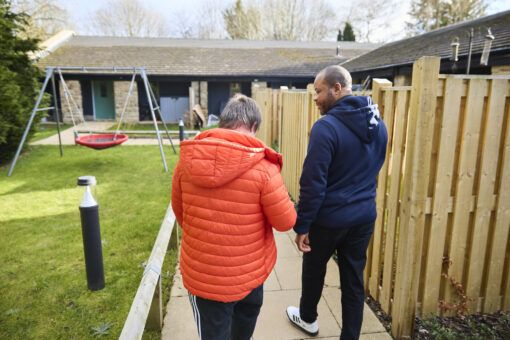
When Mel reconnected with Simon* during the pandemic, she brought with her years of experience supporting him.
She remembered someone full of humour and mischief – a man who loved music, long walks and winding people up with a cheeky grin. When she met him again in her role as Locality Manager at Discovery, she noticed he seemed quieter than she remembered.
He wasn’t talking much. He wasn’t joking. He was spending a lot of time in bed,” Mel recalls. “I remember thinking – this doesn’t quite feel like the Simon I knew.
Like many homes during the pandemic, the team had been navigating significant pressures and challenges. During that time, understandably cautious approaches had become embedded in daily practice to keep everyone safe. As circumstances began to stabilise, there was space for reflection on whether Simon’s support continued to reflect his current needs and wishes.
Looking beyond the surface
Simon was living with several restrictions and was prescribed antipsychotic medication. There had been incidents in the past, which meant some team members were naturally careful in their approach. Over time, those experiences had shaped how new colleagues understood his support needs.
Rather than focusing solely on history, the team – together – began reviewing patterns more closely. With input from behaviour specialists, they explored what Simon might be communicating through his actions.
They noticed a consistent theme: Simon would clearly indicate when he wanted space. When he felt this wasn’t understood, he could become distressed.
This prompted thoughtful team reflection.
If anyone feels their communication isn’t being respected, frustration builds,” Mel explains. “We wanted to make sure we were truly listening and responding in the right way.
With that shared mindset, the team began gradually rebuilding confidence – both Simon’s and their own.
Reviewing and reshaping support
Together, colleagues carefully reviewed existing restrictions. Where it was safe and appropriate, they reintroduced greater choice and access within his home. Cupboards were unlocked. Daily routines became more flexible. Simon was supported in making more decisions about how he spent his time.
Each step was considered, discussed and reviewed collaboratively. Progress was steady and guided by ongoing assessment and open communication within the team.
Alongside this, Mel worked closely with Simon’s mum and his psychiatrist to review his medication. A previous reduction had proved too significant at the time. This time, any changes were gradual, clinically guided and carefully monitored.
Over three and a half years, Simon’s medication was reduced at a pace that suited him, with everyone working together to ensure his wellbeing remained central.
Seeing personality return
As the medication review progressed and support approaches evolved, small but meaningful changes became noticeable.
We started seeing more of his personality again,” Mel says. “The humour, the cheekiness – even the shock-factor jokes he loves. That’s Simon.
Today, Simon enjoys playing pool, going out for meals and spending time with his mum over fish and chips. He chooses when he wants to head out and when he prefers a quieter day at home. He is building trusting relationships with newer team members with growing ease.
Importantly, he no longer requires a behaviour support plan.
For me, that represented real progress,” Mel reflects. “Everyone deserves choice and control in their life. Our role is to support that in a way that feels safe and empowering.
A home that feels different
The atmosphere within the home has developed positively too. New team members are introduced to Simon as a person first – with his interests, humour and strengths at the forefront. There is warmth, shared understanding and increasing confidence across the team.
This was not a quick change or a single intervention. It was a steady, collaborative process grounded in reflection, partnership and shared values.
Simon’s story shows what can happen when teams take time to review, listen, and adapt. By working alongside family and health professionals – and by supporting one another – the team created the conditions for Simon to reconnect with himself.
And these days?
The humour, character and spark that those who know him best always recognised are shining through once again
*Not his real name or photo